

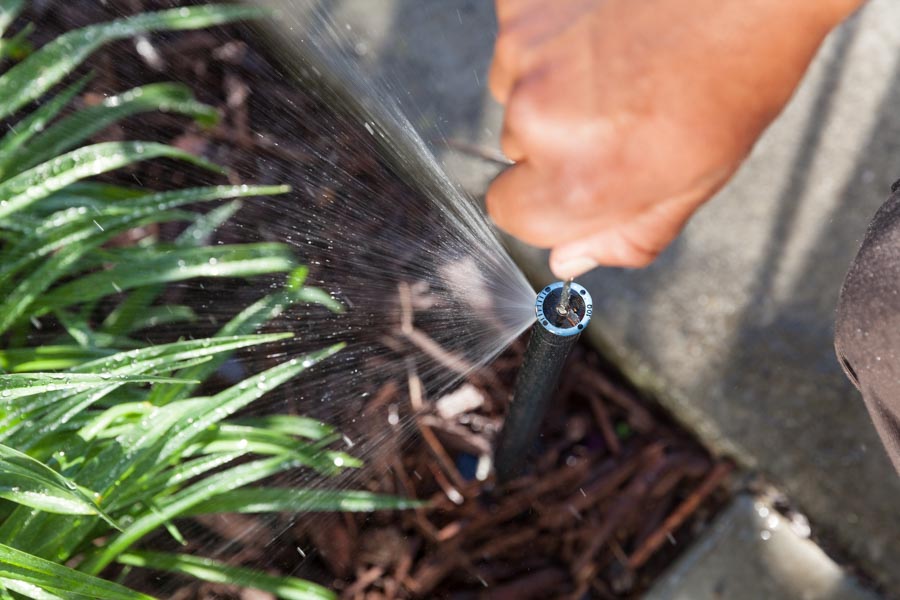
Commercial Irrigation and Water Management in the Bay Area
Water is one of the largest costs on a commercial landscape you can actually control. We find where it is being wasted, fix the cause and keep your system performing, so you protect both your budget and your plants.
Where Is Your Water Going?
Most Water Waste Hides in Plain Sight
The first step toward saving water is understanding how your existing system actually performs. These are the four problems we find most often.
Hidden Leaks and Breaks
Broken heads, leaking valves, clogged emitters and damaged tubing waste water while some plants go dry.
Schedules That No Longer Fit
Controllers set years ago run too often, in the wrong season or right after rain.
Spray Where Drip Belongs
Spray heads in planting beds lose water to wind, overspray and runoff onto walkways and parking.
Plant Decline and Ponding
Overwatering, standing water and uneven coverage often look like a plant or pest problem when the real cause is irrigation.
Irrigation Services
Six Ways We Manage Your Water
From a single repair to an ongoing program. Open any card to see what is included.
Irrigation Audits and Assessments
A baseline before you spend: what is broken, what is wasting water and which fixes matter most, so cheap repairs are separated from bigger investments.
What's included
- Zone-by-zone inspection of visible components
- Coverage, overspray, runoff and wet-area review
- Controller settings and schedule review
- Signs of drought stress and overwatering
- A prioritized summary of recommended actions
Repairs and Preventive Care
Small problems found and fixed during scheduled visits, before they show up on your water bill or in dead plants.
What's included
- Head, nozzle, valve and lateral line repairs
- Emitter and filter cleaning or replacement
- Drip tubing and connection checks
- Pressure and flushing checks
- Operation verified after every repair
Spray-to-Drip Conversion
Suitable planting beds converted to drip, which puts water at the roots instead of on the sidewalk. We assess each bed first, because drip is not right for every area.
What's included
- Bed-by-bed suitability review
- Zone, pressure and filtration check
- Dripline or emitter layout for the planting
- Filters, pressure regulators and flush points
- Testing and schedule adjustment after conversion
Smart Controllers and Scheduling
Schedules matched to plants, soil, weather and season, with weather-based smart controllers where they make sense. We fix the system first, because no controller can fix a leak.
What's included
- Controller and schedule review
- Seasonal schedule adjustments
- Weather-based controller installs and setup
- Rain shutoff and cycle-and-soak settings
- Experience with Rainmaster, Sentinel, ESP-LX, I-Core and other controllers
Ongoing Water Management
A repeating cycle of checking, correcting and adjusting, so performance holds up year after year instead of drifting back.
What's included
- Issues and repairs tracked by your account manager
- Recurring wet areas and plant stress watched
- Seasonal schedule reviews
- Water bill comparisons when you share your bills
- Next-step efficiency opportunities identified
Landscape Changes That Cut Demand
Sometimes the landscape, not the equipment, is the problem. Thirsty plants, bare soil and unused turf can be changed to need less water.
What's included
- Drought-tolerant, climate-appropriate replanting
- Compost and mulch that hold soil moisture
- Nonfunctional turf conversion for AB 1572
- Irrigation upgrades coordinated with planting
- See enhancements and landscape conversions
Our Approach
Find the Problem Before Spending the Money
We recommend the right fix for the problem, not the most expensive one.
Assess
Inspect components, review schedules and see how the landscape is responding.
Find the Cause
Equipment, coverage, scheduling, plant choice, soil or drainage.
Prioritize
Immediate repairs first, longer-term upgrades ranked by payback.
Fix
Approved repairs, adjustments and upgrades, coordinated with landscape work.
Verify
Check operation afterward and compare water use where data allows.
Find the waste. Fix the cause.
Water Savings
Water Efficiency Is an Operating Expense Strategy
Irrigation improvements can lower water bills, protect plants you have already paid for and cut avoidable repair work. How much depends on your system, so our recommendations start from what we actually find on site.
- Repair leaks and broken parts. Stops avoidable water loss right away.
- Correct schedules. Ends watering that plants do not need.
- Convert suitable beds to drip. Puts water where roots can use it.
- Improve planting and soil. Lowers how much water the landscape needs.
An example of the math, not a promise. Your actual savings come from an assessment of your system and water bills.
Get Your Real NumbersAB 1572
Ready for California's Nonfunctional Turf Rules
AB 1572 bans watering nonfunctional turf with drinking water. Functional turf such as sports fields and play areas, trees and recycled-water turf are exempt.
January 1, 2027
State and local government properties, including cities, counties, special districts and public schools.
January 1, 2028
Commercial, industrial and institutional properties, including private schools.
Plan the Change Now
We map your turf, recommend replacements, find rebates and convert the irrigation. Turf conversion
One Connected Landscape
Irrigation Works Best When It Isn't Managed Alone
One coordinated team keeps new plantings and upgrades from being undermined by an irrigation problem nobody fixed.
Maintenance
Scheduled visits catch leaks, dry spots and overwatering early.
MaintenanceEnhancements
New planting gets the right water from its first day.
EnhancementsSoil Health
Compost and mulch help soil hold water, so irrigation goes further.
SustainabilityStormwater
Runoff and ponding sorted into irrigation or drainage causes; bioswales kept to design.
Specialized Areas
Proof
Irrigation Expertise You Can Check
- Qualified Water Efficient Landscaper (QWEL) certified staff
- An irrigation operations manager with more than 10 years in the field and Rain Bird and Hunter factory training
- Systems designed and maintained to California's Model Water Efficient Landscape Ordinance (MWELO)
- Irrigation Association best practices
- Three California C-27 landscape contractor licenses

Questions
Irrigation and Water Management FAQ
How Often Do You Check Irrigation?
Irrigation is checked during scheduled visits, year-round, as part of every maintenance contract. Visit frequency is set to each property's needs, and problems are documented and scheduled for repair promptly.
Will Converting to Drip Save Water on My Property?
Often, in planting beds where spray heads lose water to wind, overspray and runoff. It depends on the existing system, soil, slopes and plant spacing, so we assess each bed before recommending a conversion and do not promise a set percentage.
Can You Help Us Comply With AB 1572?
Yes. We map functional and nonfunctional turf, recommend water-wise replacements, help you find rebates and complete the conversion, including the irrigation changes.
Do You Install Smart Controllers?
Yes. We install and program weather-based smart controllers and adjust them each season. A controller cannot fix leaks or poor coverage, so we repair the system first.
Can You Use Our Water Bills to Measure Results?
Yes. If you share your water bills, we use them to set a baseline before the work and compare usage afterward, so savings are measured rather than assumed.
Is Your Team Certified?
Our team includes Qualified Water Efficient Landscaper (QWEL) certified staff and an irrigation operations manager with Rain Bird and Hunter factory training, and we follow MWELO and Irrigation Association best practices.
Free Site Assessment
Better Water Management Starts With Understanding Your System
Recurring irrigation problems, a drip conversion to evaluate or a water bill that keeps climbing: a property specialist will walk your site and send a written recommendation. Every contract also supports Rubicon Programs, our parent company, and its East Bay workforce development mission.